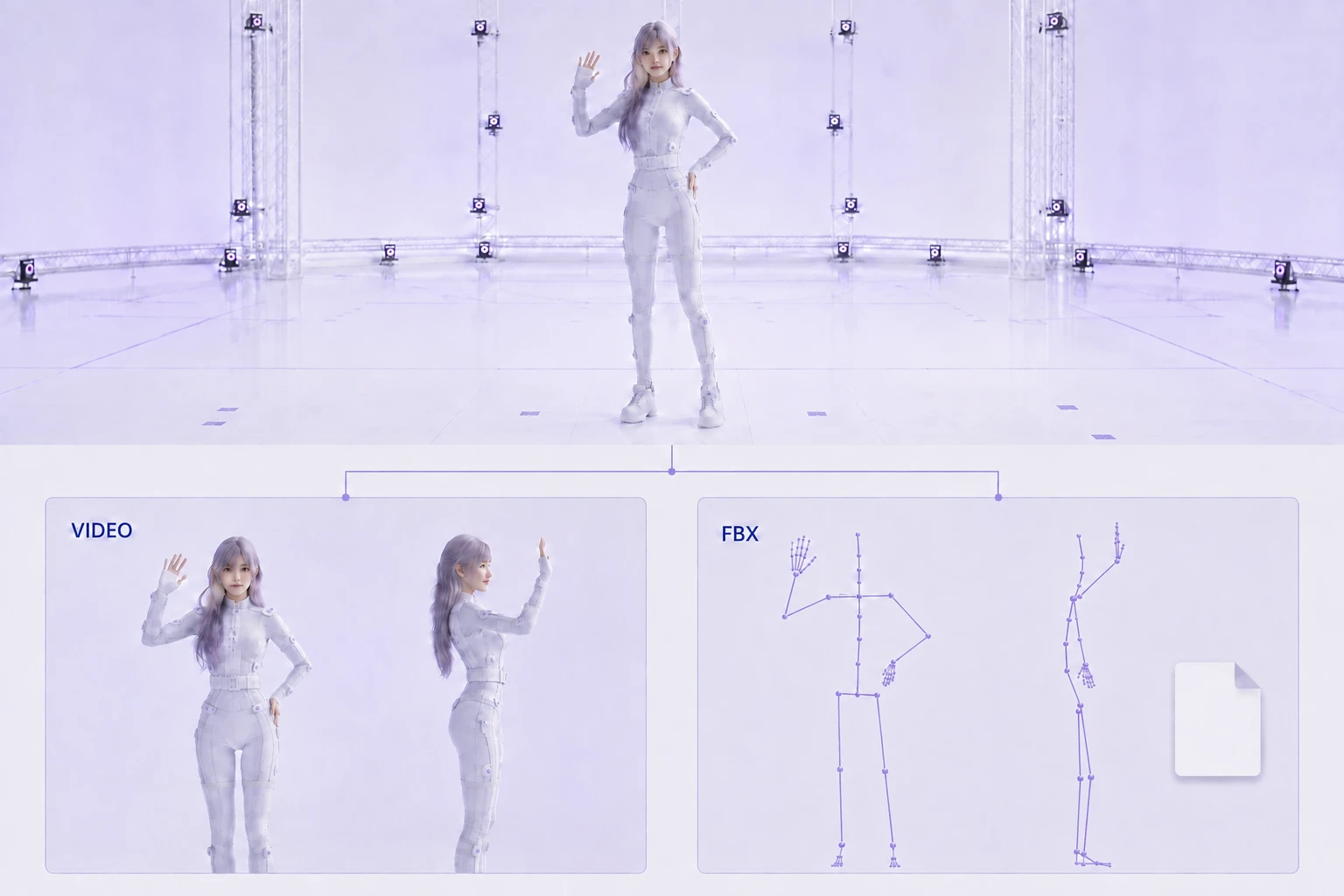
Research & AI

Human gestures for AI research.

Gesture and expression data captured from Japanese performers. Tell us about the motions you need for training or evaluating AI models that work with human movement.
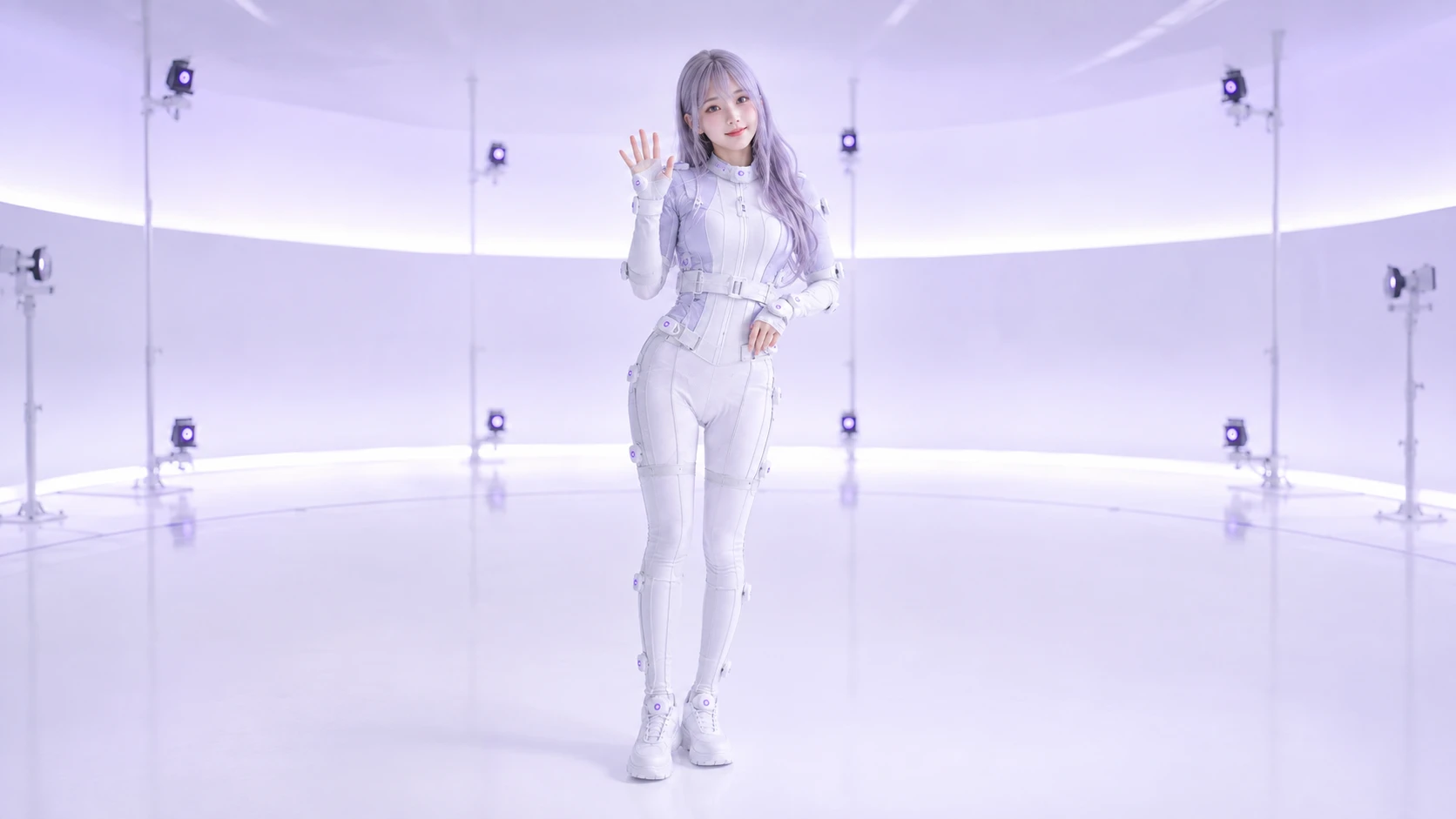
Inside the recording data

01

Record the performance in video and motion data

Reference footage preserves how the performance looks. FBX records the body motion, allowing the filmed gesture to be checked alongside its 3D movement.
02

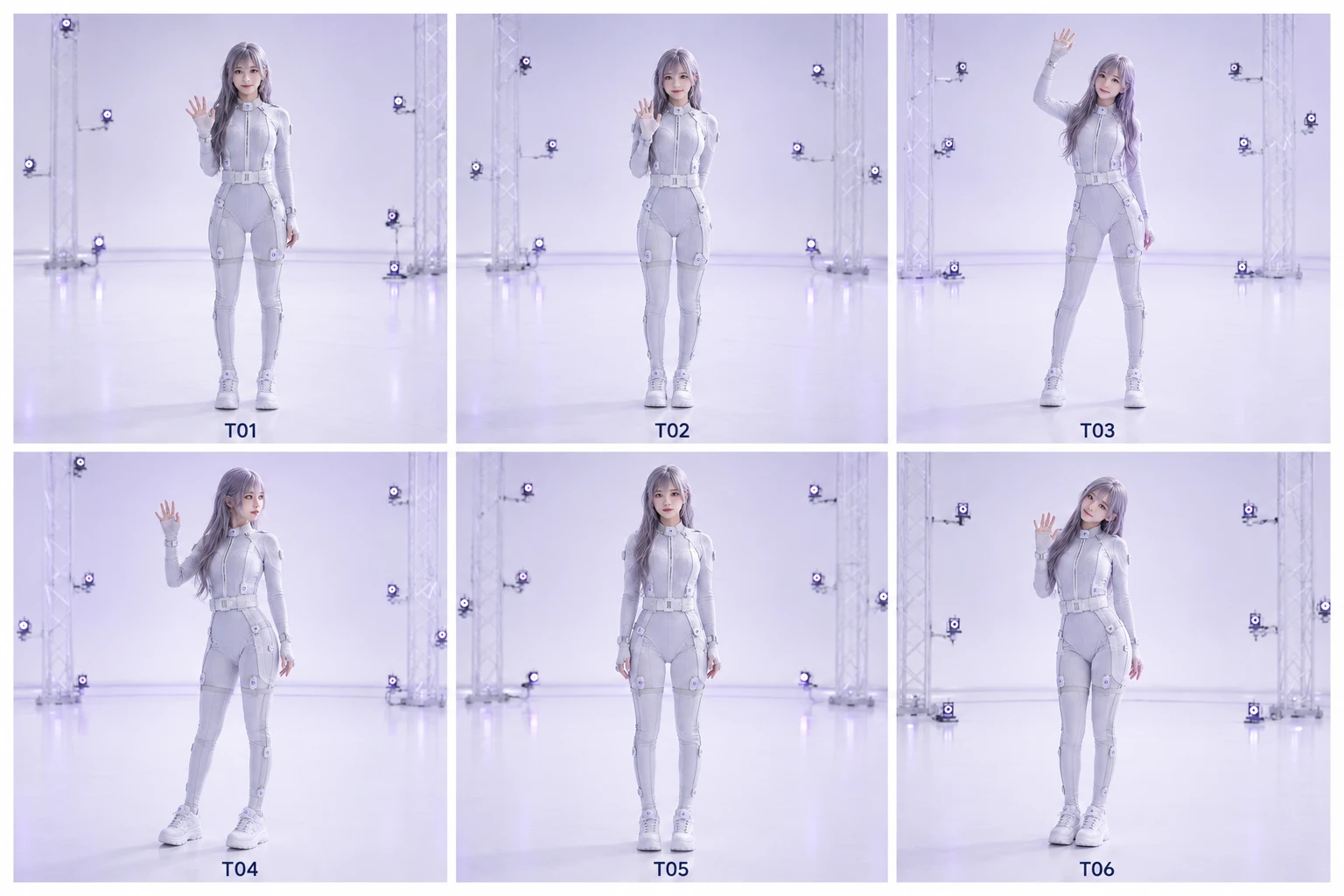
Compare six interpretations of the same wave

The published wave pack contains six performances with differences in range, gaze, the pause after a gesture and head tilt.
  • T01A natural wave
  • T02A small, restrained wave
  • T03A big, energetic wave
  • T04Notice someone, then wave
  • T05Wave and wait for a response
  • T06Wave with a questioning head tilt

03

Keep the source and identify each performance interval

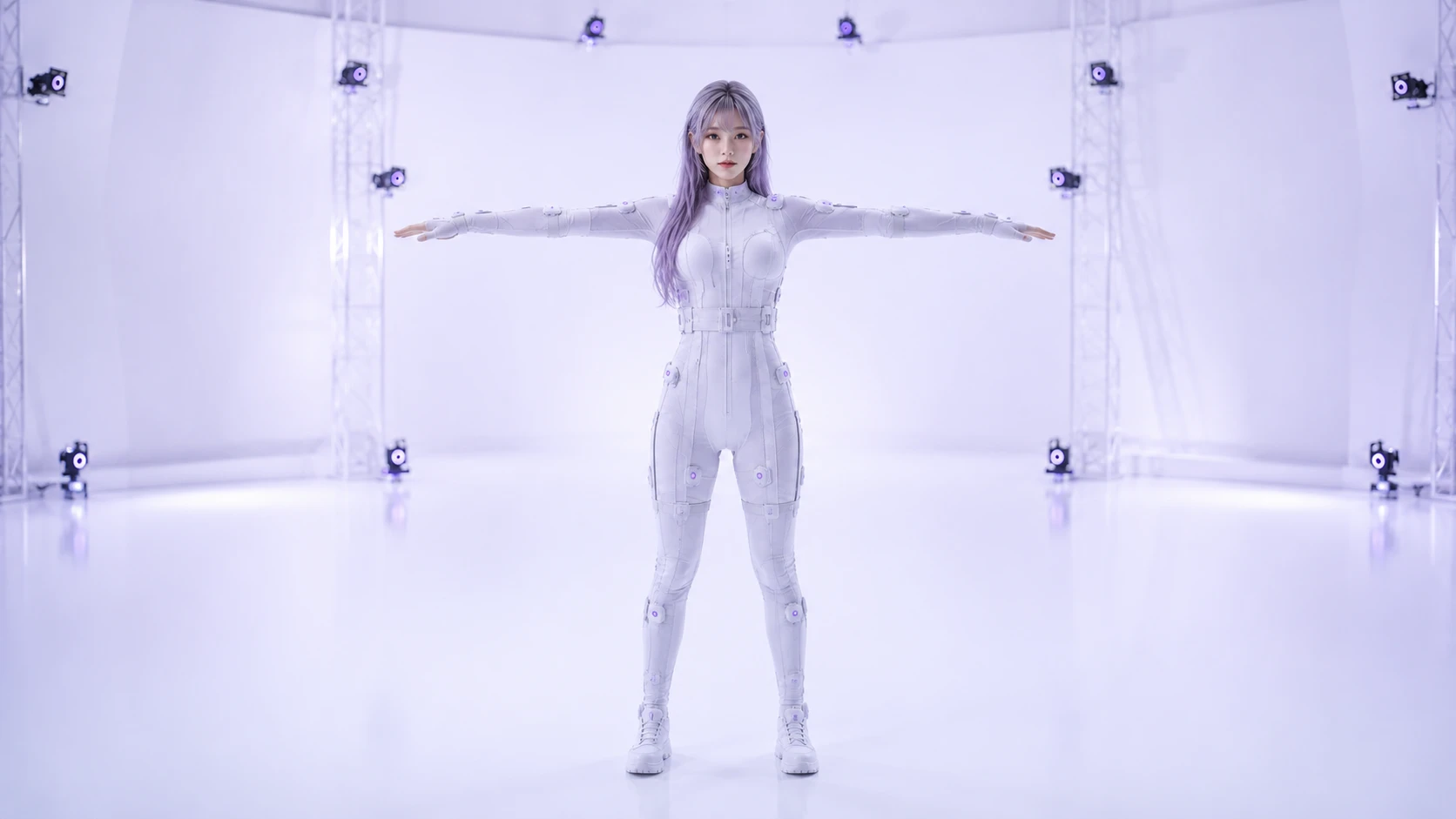
genki_Take002.fbx is retained as one file with its opening and closing T-poses. Catalog previews use the performance intervals listed below.

Preview intervals (frames) · 120 fps
IDStartEnd
T0110242104
T0224443528
T0338204880
T0452446344
T0566727728
T0680889164

Separate the action from the way it is performed

An energetic wave and a shy wave can differ in speed, range and whole-body movement. SOBURIMO aims to build data that lets researchers compare these differences in performance.

01

Generate motion with a specified personality or emotion

Capture conditions
Keep an action such as “greet someone with a right-handed wave” consistent while changing the direction: energetic, gentle or shy. Record the starting pose, position and how the action ends.
Preparing the data
Segment each action and pair it with its performance direction. Treat the intended direction separately from the impression reported by an observer.
Possible application
Explore training or evaluating models conditioned on both action and performance style, such as a gentle character greeting someone.

02

Generate or retrieve motion from text

Capture conditions
Specify the hand used, direction, travel and repetitions so the performed action can be identified clearly.
Preparing the data
Attach descriptions of the observed motion to time intervals, for example: “Raise the right hand to chest height and wave twice with small movements.” Annotation detail and Japanese or English coverage are agreed separately.
Possible application
Paired descriptions and skeletal sequences can support text-to-motion generation or natural-language motion retrieval, subject to model-specific preparation.

03

Compare generated motions under consistent conditions

Capture conditions
Repeat the same performance direction. When comparing performers, keep the instructions consistent and distinguish variation within a performer from variation between performers.
Preparing the data
Organise performer, session and take identifiers, then define training and evaluation splits. If impression ratings are needed, record the evaluators and criteria too.
Possible application
Evaluate whether a requested style is expressed and whether generated motions are varied. Perceived cuteness is not treated as a single objective ground truth.

04

Connect video observations with 3D movement

Capture conditions
The test capture includes three filmed reference views and skeletal data. Paired use requires checking time offsets and matching action intervals.
Preparing the data
Align video frames with skeletal timestamps. Review camera calibration, coordinate systems and occlusions as required. Fully synchronised, calibrated delivery has not been confirmed.
Possible application
Explore video-based 3D motion estimation or compare generated motion with a performance. Robotics additionally requires retargeting, joint-limit and contact checks, and control learning.

About the data

These specifications describe the current test recordings. Delivery formats and contents are agreed for each project.

Motion source
FBX, 120 fps, 73 bones. Skeleton structure, naming and coordinate conventions are reviewed before integration.
Reference video
1920×1080 at 60 fps, with three filmed viewpoints and an avatar screen reference. Video delivery requires a separate review of usage permissions.
Delivery requirements
Actions, data volume, file formats, skeleton structure, labels and reference video. Retargeting and any additional processing are discussed in advance.

Motion data describes body movement; it is not a measurement of robot joint torque or contact forces. Please confirm that the available information fits your intended use.

Discuss research and AI use

Contact us for pricing

Quotes are based on the motions and volume of data needed, along with the scope of research or commercial use. You can enquire about a subset of the data.

Evaluation data can also be discussed after reviewing your intended use and the conditions for providing it.

Usage terms and performer consent

AI training, sharing within or outside your organisation, and commercial use are addressed in the agreement. Only data covered by the relevant performer permissions can be provided.

The standard license does not permit AI training. Research and AI use require separate review and agreement on terms.

How to get started

  1. 01

    Tell us about your project

    Share your research or development goals, the motions you need and your timeline. You can contact us before your specification is final.

  2. 02

    Review data and usage

    We discuss the data, formats and sharing requirements, then check performer permissions to determine what can be provided.

  3. 03

    Quote and agreement

    Pricing reflects data volume and usage terms. We agree on the contents, price and delivery schedule before proceeding with a contract.

Research examples for these applications

Contact us

Tell us your research or AI use case and the data you need. Terms and pricing are discussed individually.